The PGI (General Import Permit) is one of the main tools used in Switzerland to regulate the importation of certain sensitive products: agricultural goods, products subject to compulsory stockpiling, fuels and plant protection products.
It is a framework authorisation granted to professional importers, enabling them to carry out repeated import operations within a strictly regulated environment.
Definition of the PGI: the General Import Permit in Switzerland
The General Import Permit (PGI) is a permanent authorisation (as opposed to a one-time import permit) that allows its holder to import goods subject to mandatory authorisation.
The PGI is required notably for:
- agricultural products subject to the Ordinance on Agricultural Imports (OIAgr);
- products subject to compulsory stockpiling (edible oils, sugar, coffee, rice, etc.), managed by Réserve Suisse;
- fuels and liquid combustibles, managed by Carbura;
- plant protection products imported for professional or commercial use.
The PGI is therefore an instrument of:
- agricultural policy,
- security of supply (compulsory reserves),
- health protection and environmental protection (phytosanitary products, fuels).
Main legal bases of the PGI
The legal foundations of the PGI are found in several pieces of Swiss federal legislation, including:
- the Ordinance on Agricultural Imports (OIAgr), which requires an import permit (often in the form of a PGI) for certain agricultural products and tariff quotas;
- regulations governing plant protection products, which require a PGI for professional imports;
- ordinances on compulsory stockpiling (basic foodstuffs, fuels), which link importation to the Swiss compulsory reserve system;
- Swiss customs law, which distinguishes between specific import permits, general import permits (PGI) and other authorisations.
Products subject to a General Import Permit in Switzerland
Agricultural products under OIAgr
Many agricultural products may only be imported with a PGI, often in connection with tariff quotas. These include:
- certain fruits, vegetables and potatoes;
- certain processed products;
- other foodstuffs listed in the OIAgr annex.
For these products, the PGI is often inseparable from the management of tariff quotas (TQ).
Products subject to compulsory stockpiling – Réserve Suisse
For a number of essential food products, Switzerland imposes compulsory stockpiling. Importers exceeding specific quantity thresholds must hold a PGI and comply with the obligations laid down by Réserve Suisse.
Products include:
- edible oils,
- sugar,
- coffee,
- rice,
- other basic foodstuffs.
The Réserve Suisse PGI triggers obligations to:
- build compulsory reserves,
- comply with stock rotation rules,
- undergo inspections.
Fuels and liquid combustibles – Carbura
The importation of fuels and liquid combustibles into the Swiss customs territory requires a PGI issued by Carbura. Products include:
- gasoline,
- diesel,
- heating oil,
- certain special products of a similar nature.
The objective is to ensure strategic fuel reserves for the country’s security of supply.
Plant protection products subject to authorisation
Plant protection products (pesticides, herbicides, fungicides, etc.) imported for professional or commercial use require a PGI issued by the Federal Office for Agriculture (FOAG).
The holder of a phytosanitary PGI must in particular:
- comply with safety and health protection rules,
- ensure traceability of the products,
- provide safety data sheets and compliant labelling,
- comply with all regulations on environmental protection and water protection.
Who can obtain a PGI and under what conditions?
The following may obtain a PGI:
- Individuals domiciled in Switzerland;
- Legal entities and companies with their registered office in Switzerland;
- Foreign companies with a Swiss branch, subject to the applicable rules.
The conditions vary depending on the type of product:
- for agricultural products, FOAG requires a professional import activity, compliance with tariff quota rules and sufficient administrative capacity;
- for products subject to compulsory stockpiling, Réserve Suisse and Carbura additionally require the capacity to manage stocks;
- for plant protection products, the focus is on technical competence and compliance with safety rules.
Procedure for obtaining a PGI
The procedure for obtaining a General Import Permit (PGI) depends on the category of products concerned and on the competent authority (FOAG, Réserve Suisse, Carbura). In all cases, it is a structured administrative process designed to verify the importer’s ability to meet the legal, technical and logistical requirements associated with the authorised goods. While the steps vary from one sector to another, they generally follow an official process including the PGI application, review of the conditions, integration into the relevant management systems and ongoing compliance with regulatory obligations.
Agricultural products – FOAG / OIAgr
For agricultural products, the PGI is generally requested via the electronic platform for managing tariff quotas. This platform enables users to:
- request a General Import Permit,
- participate in tariff quota auctions,
- submit import applications,
- transfer quota shares.
FOAG reviews the application and issues the PGI if all requirements are met.
Products under compulsory stockpiling – Réserve Suisse
For products managed by Réserve Suisse:
- the importer creates a client account on the Réserve Suisse portal;
- they request a PGI for the relevant product categories they intend to import;
- the Réserve Suisse PGI is generally issued free of charge;
- the holder is subject to compulsory stockpiling obligations and inspections.
Fuels – Carbura
For fuels and liquid combustibles:
- the importer applies to Carbura for a PGI;
- the Carbura PGI integrates the importer into the system of compulsory petroleum reserves in Switzerland;
- obligations relating to storage, reporting and inspections apply.
Plant protection products – FOAG
For plant protection products:
- the applicant completes the official PGI application form;
- FOAG verifies the requirements (domicile, registered office, competence, regulatory compliance);
- the PGI is issued and must be updated in the event of changes (address, company name, commercial register data, etc.).
Using the PGI in customs practice
The PGI is not a customs declaration; it is a pre-authorisation. For each import:
- The importer identifies the tariff number in Tares (the electronic customs tariff).
- They check in Tares whether the number is subject to authorisation (PGI FOAG, Réserve Suisse, Carbura, etc.).
- They declare the PGI when submitting the electronic customs declaration.
- They keep documentation proving that the importation complies with the conditions attached to the PGI.

An importation without a PGI where a PGI is required may lead to:
- blocked or seized goods;
- administrative sanctions;
- possibly criminal penalties.
For companies that must manage import VAT and related reporting obligations, it may be necessary to appoint a VAT tax representative in Switzerland, particularly when import operations are frequent or involve significant volumes.
Duration, fees and obligations of PGI holders
As a general rule:
- the PGI is valid until revoked, unless expressly limited in time;
- issuance of a PGI by FOAG, Réserve Suisse or Carbura is often free of charge, although inspection or administrative fees may apply;
- the holder must:
- maintain a record of imports;
- comply with the authorised quantities and conditions;
- submit to inspections by the authorities;
- comply with any compulsory stockpiling obligations, where applicable;
- comply with all applicable sector-specific regulations (agricultural, energy, phytosanitary).
Failure to comply with these obligations may result in:
- suspension or withdrawal of the PGI;
- fines and other sanctions.
These obligations can be managed internally or entrusted to administration services for Swiss companies, ensuring rigorous monitoring of imports, inventory and compliance controls.
PGI, specific import permits and other authorisations
Swiss customs law distinguishes between:
- specific import permits (one-off authorisations for a particular operation);
- general import permits (PGI) (framework authorisations for repeated imports);
- other licences and authorisations (including export licences).
The choice between a specific import permit and a PGI depends in particular on:
- the frequency of imports,
- the annual volume,
- the nature of the products.
To explore the tax implications related to import operations in more detail, you may also refer to our article on the effective management of import VAT in Switzerland.
Upcoming reform of the agricultural PGI
A reform of Swiss customs law and of the Ordinance on Agricultural Imports (OIAgr) plans to eliminate the PGI as the central instrument for managing agricultural tariff quotas.
This means that in the coming years:
- the agricultural PGI is likely to be replaced by other quota management mechanisms;
- import processes will have to be updated (ERP systems, internal procedures, contracts);
- importers will need to closely monitor the entry into force of the new rules.
As of today, however, the PGI remains in force for agricultural products, and importers must continue to comply with the existing framework.
✅ Practical checklist for importers
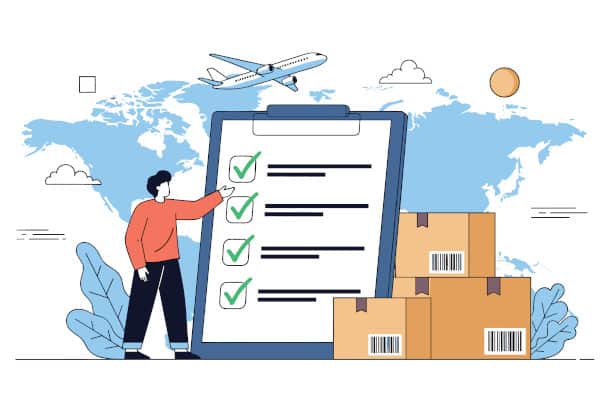
For an importer, the typical process is as follows:
- Identify the product and its tariff number in Tares.
- Check whether the importation is subject to a PGI (mention of an authority such as FOAG, Réserve Suisse, Carbura, etc.).
- Determine whether a PGI is required or whether a specific, one-off permit is sufficient.
- If necessary, submit a PGI application (FOAG platform, Réserve Suisse portal, contact with Carbura, phytosanitary application form).
- Update internal procedures (import checklist, instructions to the forwarder, ERP configuration) with the PGI number and applicable conditions.
- Ensure ongoing compliance with obligations: compulsory stockpiling, declarations, inspections, possible renewals.
- Monitor legal developments (customs reform, revisions of the OIAgr) to adjust your compliance framework in good time.
How My Swiss Company SA supports importers in Switzerland
The Swiss regulatory environment surrounding the PGI (General Import Permit), agricultural quotas, compulsory stockpiling and customs procedures is evolving rapidly and requires a solid command of tax, customs and administrative law. For an importing company, compliance does not stop at obtaining the right permit: it also involves continuous oversight of obligations, close monitoring of regulatory changes and precise coordination between the authorities (FOAG, Réserve Suisse, Carbura, BAZG), the freight forwarder and in-house accounting.
This is precisely where My Swiss Company SA – Swiss fiduciary firm steps in. We help importing businesses to:
- determine the correct tariff numbers and assess whether a PGI, a specific permit or a simple customs declaration is required;
- submit official applications to FOAG, Réserve Suisse or Carbura and manage all administrative exchanges until the permit is obtained;
- design or adapt their internal procedures (ERP, customs checklists, documentation for freight forwarders) to ensure ongoing compliance;
- manage regulatory follow-up, including compulsory stockpiling obligations, periodic declarations, inspections and any necessary permit updates;
- anticipate customs reforms and OIAgr developments in order to secure their import processes over the long term.
As a specialised fiduciary, we act as a single, reliable and proactive point of contact to ensure that your company imports into Switzerland in full compliance, without the risk of customs blockage, sanctions or loss of quota rights.
FAQ – PGI and import authorisations in Switzerland
What is a PGI in Switzerland?
The PGI is a general import permit that allows a professional importer to repeatedly import goods subject to authorisation, such as agricultural products, fuels, goods subject to compulsory stockpiling, or plant protection products.
What is the difference between a PGI and a specific import permit?
A PGI is a permanent authorisation covering recurring imports, whereas a specific import permit is issued for a single operation or a limited quantity.
Which products require a PGI?
A PGI may be required for:
- certain agricultural products under OIAgr,
- products subject to compulsory stockpiling by Réserve Suisse (oils, sugar, rice, coffee, etc.),
- fuels and liquid combustibles (Carbura),
- plant protection products intended for professional or commercial use.
Who can obtain a PGI?
The following are eligible for a PGI:
- individuals domiciled in Switzerland,
- Swiss companies,
- foreign companies with a branch in Switzerland.
The exact requirements vary depending on the competent authority (FOAG, Réserve Suisse, Carbura).
Companies that do not yet have a local entity may, where required, rely on Swiss company formation and establishment services to meet the conditions necessary to obtain a PGI.
How do I request a PGI for agricultural products (OIAgr)?
Applications are submitted via the electronic tariff quota management platform. FOAG reviews the application, verifies the import conditions and issues the PGI if all criteria are met.
How do I obtain a PGI for products subject to compulsory stockpiling?
Companies must open an account with Réserve Suisse, request a PGI for the relevant product categories and comply with all compulsory stockpiling obligations (quantities, rotation, inspections).
How do I obtain a PGI for fuels and liquid combustibles?
Companies must apply to Carbura, which assesses their storage capacity and compliance with the requirements of the Swiss compulsory fuel reserve system.
How do I obtain a PGI for plant protection products?
The applicant must complete an official FOAG form. The PGI is granted only if the company meets all requirements in terms of safety, traceability, technical competence and regulatory compliance.
Is a PGI required for all imports?
No. A PGI is required only for products that are specifically subject to authorisation. For other goods, a standard customs declaration is sufficient.
How do I know if a product requires a PGI?
You must consult the Tares customs tariff and check whether the tariff number is indicated as subject to authorisation. The competent authority (FOAG, Réserve Suisse, Carbura, etc.) will appear in Tares where a PGI is required.
How is a PGI used during an import?
The PGI must be declared in the electronic customs systems at the time of import. The importer must also keep all documentation proving that the import complies with the conditions of the permit.
What happens if I import a product requiring a PGI without one?
The goods may be blocked, seized or returned. The company risks administrative, tax and criminal sanctions.
Does the PGI have a validity period?
In general, the PGI remains valid until revoked, unless a specific time limit is set. It must be updated whenever the company’s details change (address, commercial register, changes in activity, etc.).
Is the PGI subject to fees?
Issuance is generally free of charge, although some authorities may charge fees for inspections, checks or related services.
Does the PGI impose specific obligations?
Yes. Depending on the category of products concerned, the company must:
- maintain import records,
- comply with compulsory stockpiling rules where applicable,
- respect authorised quantities and limits,
- submit to inspections by the authorities.
What is the difference between a PGI and tariff quotas?
The PGI is an import authorisation, while tariff quotas are volumes of imports benefiting from preferential customs duty rates. The two mechanisms are often linked in the context of agricultural imports.
Will the agricultural PGI be abolished?
A reform of Swiss customs law provides for the future elimination of the PGI as the main mechanism for managing agricultural quotas. Importers will have to adapt to new procedures once the revised legal framework comes into force.
How can My Swiss Company SA assist with PGI management?
My Swiss Company SA supports importers with:
- tariff classification,
- assessment of customs obligations,
- PGI applications (FOAG, Réserve Suisse, Carbura, FOAG–phytosanitary),
- implementation of internal procedures,
- ongoing regulatory monitoring and compliance.
Do I need a PGI to import wine or alcohol into Switzerland?
Some agricultural products, including certain foodstuffs and processed products covered by OIAgr, may only be imported with a PGI. Depending on their classification in the customs tariff and the quotas concerned, some products such as wine may require a General Import Permit. You must always check the tariff number in Tares to determine whether the import is subject to authorisation.
How can I check whether my product is subject to an import permit?
You must identify the product’s tariff number in Tares and then check whether this number is indicated as subject to authorisation (PGI FOAG, Réserve Suisse, Carbura or others). Where a PGI is required, the competent authority appears directly in Tares, confirming that a General Import Permit may be necessary.
What is the difference between a PGI and an import licence?
The PGI is a permanent authorisation allowing repeated imports of goods subject to authorisation (agricultural products, compulsory stockpiling, fuels or plant protection products). An import licence in the broader sense covers various types of authorisations, including the specific import permit, which applies only to a single operation or a defined quantity. The PGI is therefore a specific type of licence designed for ongoing import activity.