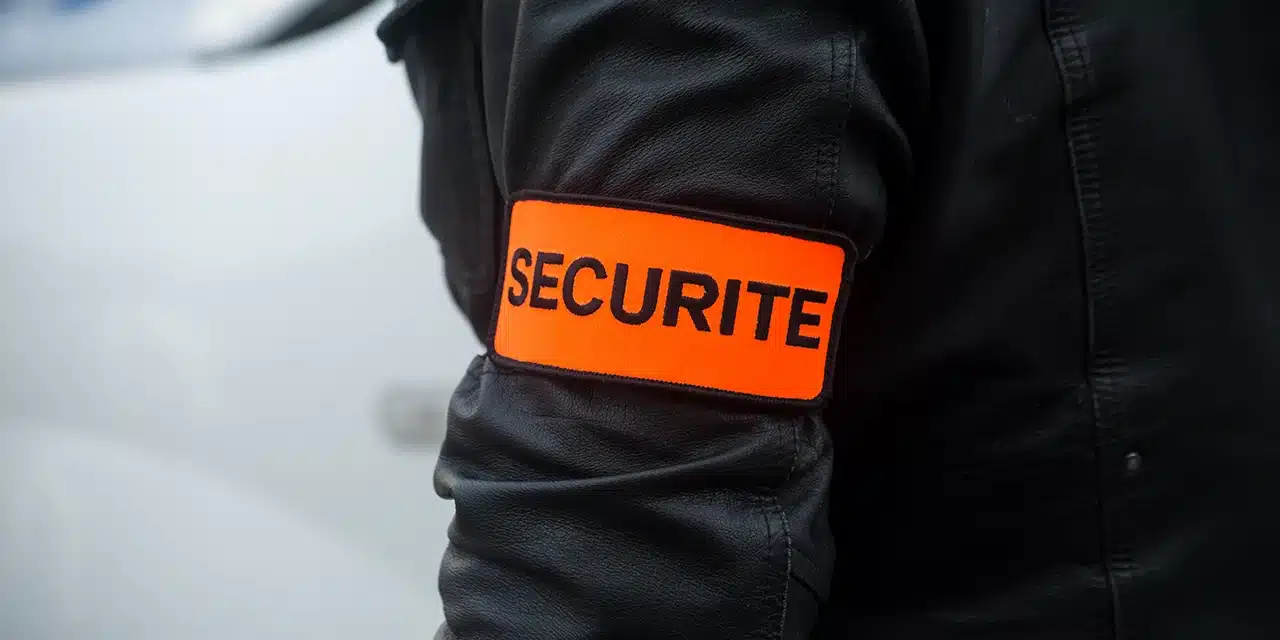
Starting a security company in Switzerland requires a cantonal licence obtained before you trade. There is no federal licence and no single national procedure: six French-speaking cantons share a concordat, while Zurich, Bern, St. Gallen and the others each apply their own law. The manager you appoint must be Swiss, an EU or EFTA national, or hold a permanent residence permit, and the company must carry liability cover of at least CHF 5 million.
Contents
Why there is no federal licence
Switzerland regulates private security at cantonal level. Six French-speaking cantons, Fribourg, Vaud, Valais, Neuchâtel, Geneva and Jura, signed the Concordat on Security Companies of 18 October 1996, which gives them a common rulebook and a licence valid across all six. Every other canton legislates alone.
This is not an accident of history. The German-speaking cantons attempted a similar inter-cantonal agreement in 2017, and it failed when several of them chose their own cantonal rules instead. The result is the patchwork you have to navigate today, and it makes the choice of your registered office a regulatory decision rather than an administrative one.
My Swiss Company advice
Work backwards from your market. Identify the cantons where you will actually sell, then choose the canton of incorporation that covers that market with the fewest procedures. A Geneva seat carries a licence valid in six cantons; a Zug or Zurich seat does not. Choosing the canton on tax grounds alone and discovering afterwards that you need recognition in four other cantons costs more than the tax saved.
Which services need a licence
In the concordat cantons, three families of activity trigger the licensing requirement: guarding or surveillance of movable and immovable property, protection of persons, and secure transport of goods or valuables. The rules apply whether the work is carried out on public or private land, as a main or secondary activity, paid or unpaid, by staff or through installations such as an alarm centre.
The decisive test is whether the service is supplied to third parties under a contract of mandate. An industrial company that uses its own staff to guard its own premises, for its own benefit only, falls outside the scope. The moment guarding is sold to a client, the licence becomes mandatory.
What Zurich excludes, and why it matters
Zurich publishes an explicit negative list, which is the clearest guide to where the boundary sits anywhere in Switzerland. Minor control and supervision services fall outside the regime: ticket checks, cash desk services, visitor guidance and visitor care. So do alarm centre services with no direct contact with the public, and private escorts for exceptional transports who already hold a police permit.
Two exclusions are traps rather than reliefs. Private traffic management requires a separate cantonal permit under the Signalisation Ordinance, granted by the traffic police. Detective work is governed by an entirely different Zurich statute on business agents, property brokers and private detectives. If your business plan mixes guarding with investigations or traffic marshalling, you are looking at two or three permits, not one.
The hospitality exception
Door supervision in bars, clubs and restaurants sits in an awkward place. In the concordat cantons, an operator who employs its own door staff must obtain a licence to hire security personnel, even though it is not a security company. In Zurich, the requirements for hospitality door staff come from the Hospitality Act and are enforced by the municipalities, not the cantonal police. Bern excludes hospitality security staff from its security law but subjects them to its own hospitality act.
The rule that stops most foreign groups
In the concordat cantons, the licence to operate is granted only if the designated manager is a Swiss national, a national of an EU or EFTA member state, or, for nationals of other states, the holder of a permanent residence permit. The same nationality logic appears in Zurich, where all staff providing security services must be Swiss, EU or EFTA nationals, or hold a C permit.
Four further conditions apply to the manager in the concordat cantons: legal capacity, solvency or the absence of definitive certificates of unsatisfied claims, a guarantee of good repute assessed under a directive of the Concordat Commission, and success in the manager’s examination on the applicable legislation.
Important
A resident director mandate does not satisfy this requirement. The manager must sit and pass the concordat examination, meet the good repute test personally, and hold sole signing authority in the company. A foreign group setting up in Switzerland must therefore recruit or partner with a qualified individual. This is the constraint that shapes the whole project, and it is better addressed first than last.
Three conditions that apply to the company
Alongside the manager, the company itself must not be bankrupt, must offer every guarantee that its officers will comply with the concordat and with applicable federal law, and must carry civil liability insurance with cover of at least CHF 5 million. St. Gallen applies the same CHF 5 million floor, which makes it a de facto national standard even outside the concordat.
A drafting point that blocks applications
The designated manager must hold sole signing authority. Joint signature by two people is accepted only where no sole signature exists in the company. Articles of association drafted without this in mind force a notarised amendment after the company is already registered, and the licensing file waits in the meantime.
One licence, national reach
Two mechanisms let a single licence travel. Inside the concordat, a licence granted by one of the six cantons is valid across all six for four years, renewable, subject only to notifying the relevant authority when you open a branch on its territory.
Outside the concordat, the Internal Market Act does the work. St. Gallen states it plainly: licences from other cantons with equivalent requirements apply in St. Gallen as a matter of principle, and it names Aargau and Basel-Landschaft as examples. Zurich takes the same position, and waives its own permit where you already hold a valid licence from another canton covering the services you provide there.
| Route | What it gives you | What it still requires |
|---|---|---|
| Concordat licence (six cantons) | Direct validity in Fribourg, Vaud, Valais, Neuchâtel, Geneva and Jura for four years | Notification to the canton where you open a branch |
| Recognition under the Internal Market Act | The right to operate in a canton such as St. Gallen or Zurich without a second licence, free of charge | Liability cover of at least CHF 5 million, a copy of the out-of-canton licence, and notification of each deployment |
| A second cantonal licence | Full local standing where requirements are not deemed equivalent | A complete new application, its fee and its lead time |
Sources: Concordat on Security Companies, canton of St. Gallen, canton of Zurich. Position as at 31 August 2026.
What notification actually involves
Recognition is not a formality you complete once. In St. Gallen, a security company operating on an out-of-canton licence must notify each assignment to the cantonal police, giving the client, the occasion, the place and period of the assignment, the list of officers deployed and the name and telephone number of the officer in charge. The officers themselves must be registered or licensed with a Swiss police force. Plan for the administrative load, not just the legal right.
Your Swiss security venture
The canton is chosen before incorporation, not after
Applicable regime, cross-cantonal reach of the licence, sole signing authority for the manager, corporate purpose, liability cover: all of this belongs in the articles of association, and none of it is easy to correct later. My Swiss Company structures the incorporation around the licensing regime that will apply to you, from Geneva, Lucerne or Zug.
Discuss your project
A Swiss Corporate Services Provider in Geneva, Lucerne and Zug, serving clients in more than 20 countries.
Fees and timelines by canton
Licence fees are modest, between CHF 400 and roughly CHF 2,000 including the examination. Lead times are what actually determine your launch date, and they are routinely underestimated because the company must exist before the file can be submitted.
| Canton | Fee | Validity | Lead time to plan for |
|---|---|---|---|
| Geneva | CHF 500 to operate, CHF 300 to hire staff, CHF 500 for the full examination | 4 years, valid in six cantons | File submitted on the official calendar and before the examination |
| Vaud | CHF 500 for the licence plus CHF 500 for a full examination session, CHF 1,000 to CHF 2,000 in total | 4 years, valid in six cantons | About 15 days for a straightforward file, about 3 months where there are complications |
| Zurich | CHF 400, invoiced on receipt and payable immediately | Unlimited, but tied to the person of the manager | Complete file at least 3 months before you start trading |
| St. Gallen | CHF 500 | 4 years | Full documentary file including certified register extract and insurance certificate |
| Bern | Cantonal tariff | Unlimited | Application at least 30 days before starting, or 15 days to have an out-of-canton licence recognised |
Sources: ge.ch, vd.ch, zh.ch, sg.ch, police.be.ch. Amounts recorded on 31 August 2026 and to be confirmed with the authority before filing.
Geneva requires physical premises
Geneva grants the licence only where the company has a physical registered office in the canton. A registered address alone does not meet this requirement for security work, although it is accepted in many other sectors. The commercial lease therefore sits on the critical path, alongside the manager’s examination, and it commits fixed costs before the first invoice.
Licensing your officers and paying them
Every officer needs to be covered by a licence to hire security personnel, which is separate from the licence to operate and is obtained officer by officer. In the concordat cantons it is granted only if the officer is Swiss, an EU or EFTA national, holds a permanent residence permit or has held a residence permit for at least two years, has legal capacity, and has not been convicted in the ten years before the application of acts incompatible with the work.
Using temporary staff does not sidestep this. The officer supplied must be licensed in the same way, and the company supplying them falls under the Employment Services Act, whose conditions are set out in our guide to setting up a recruitment or staff leasing agency in Switzerland.
Training is not left to chance either. St. Gallen requires security staff to have completed a basic course of at least 20 hours to the standard set by the industry association. Zurich places the responsibility on the company: theoretical and practical training must be tailored to the actual tasks, refreshed regularly, and officers must know their rights and duties.
The collective agreement and its ten-employee threshold
The national collective bargaining agreement for the private security sector has been declared generally binding. It applies to companies with at least ten employees, and to members of the employers’ association. It sets minimum wages, an annual working time of between 1,801 and 2,300 hours, and a time premium of 10 per cent for night work between 23:00 and 06:00, for Sunday work and for public holidays.
| Category | Scope | Minimum in the first year of service |
|---|---|---|
| A, monthly paid | Contractual workload between 1,801 and 2,300 hours per calendar year | CHF 54,270 for an annual working time of 2,000 hours, rising to CHF 62,755 from the thirteenth year of service |
| B, monthly paid part time | Between 901 and 1,800 hours per calendar year | CHF 35,560 for an annual working time of 1,400 hours |
| C, hourly paid | Up to 900 hours per calendar year | CHF 24.15 per hour excluding holiday pay, with the scale raised by 2 per cent on 1 January 2026 |
Source: national collective bargaining agreement for the private security sector, in force since 1 July 2014, as at 1 January 2026, published by the Geneva labour inspectorate.
Three cost items are regularly missing from business plans. Uniforms and working equipment are supplied at the employer’s expense. Holders of the federal certificate in security and surveillance, or in the protection of persons and property, receive an allowance of at least CHF 200 per month on top of the minimum wage. Sick pay and maternity benefits run at a minimum of 80 per cent of the average AVS salary, thirteenth month included, from the second day.
My Swiss Company advice
Model the ten-employee threshold before you hire, not after. Moving from nine to eleven officers does not simply make you bigger: it brings your entire payroll inside a generally binding agreement, night and Sunday premiums included. On a night guarding contract those premium hours are paid and not billed, so they belong in the price from the first quotation. Our administration services for Swiss companies build these parameters into the first payslip.
Services provided abroad: the PSSA and ICoCA
If any part of your model involves providing security services outside Switzerland, a federal layer applies on top of the cantonal one. The Federal Act on Private Security Services Provided Abroad, adopted on 27 September 2013 and in force since 1 September 2015, governs Swiss-based providers, companies managed from Switzerland that offer security services overseas, and the individuals working for them.
The requirement that surprises new entrants is the certification obligation. Swiss legislation makes membership of the International Code of Conduct Association mandatory for companies based in Switzerland that provide security services abroad. The Association is itself hosted in Switzerland, and the Export Controls and Private Security Services Section of the Federal Department of Foreign Affairs administers the regime.
The Act also prohibits Swiss-based providers from taking part in human rights violations or from offering services in contexts connected with serious breaches of human rights. Qualify this dimension when you draft the corporate purpose, because it adds to the cantonal regime rather than replacing it.
The sequence that works
The order of steps is not interchangeable, because each one conditions the next. The authority asks for an extract from the commercial register and for the articles of association, which means the company must already exist.
- Choose the canton on the basis of the market you will serve and the reach of the licence it delivers.
- Identify the manager and verify nationality or permit status, good repute and availability before anything else is committed.
- Incorporate with a corporate purpose that expressly covers the intended activities and articles that grant the manager sole signing authority.
- Secure premises where the canton requires a physical registered office.
- Negotiate liability cover of at least CHF 5 million and obtain the insurer’s certificate.
- File the application and sit the examination where one is required.
- License your officers individually, and set up the training records the canton expects.
One rule catches projects that slip. In the concordat cantons, the licence is withdrawn where it ceases to be used, or where no use is made of it within six months of it being granted. Obtaining the licence early and launching late is not a safe strategy.
FAQ: starting a security company in Switzerland
Do you need a licence to start a security company in Switzerland?
Yes. A prior licence is required to operate a security company and a separate one to hire security personnel. It is issued by the canton where the company has its registered office, since there is no federal licence for security services provided inside Switzerland. In the six cantons of the French-speaking concordat, Fribourg, Vaud, Valais, Neuchâtel, Geneva and Jura, the licence lasts four years and is valid across all six. Zurich, Bern, St. Gallen and the other cantons issue their own licences under their own laws.
Can a foreign national own and run a Swiss security company?
Ownership is open, but management is not. The designated manager must be a Swiss national, a national of an EU or EFTA member state, or the holder of a permanent residence permit. The manager must also pass the concordat examination in the French-speaking cantons and hold sole signing authority in the company. A resident director mandate does not satisfy this requirement, so a foreign group must recruit or partner with a qualified individual.
How much does a Swiss security licence cost?
Fees range from CHF 400 in Zurich to between CHF 1,000 and CHF 2,000 in the canton of Vaud including the examination. Geneva charges CHF 500 for the licence to operate, CHF 300 for the licence to hire staff and CHF 500 for the full examination. St. Gallen charges CHF 500 for a licence valid four years. None of these figures includes incorporation, premises, or the annual premium for the CHF 5 million liability cover that the licence requires.
Is one cantonal licence enough to operate across Switzerland?
Often yes, through two different mechanisms. A concordat licence is directly valid in all six French-speaking signatory cantons. Elsewhere, the Internal Market Act means a licence from a canton with equivalent requirements is generally recognised: St. Gallen and Zurich both waive their own permit in that case. Recognition still comes with conditions, notably liability cover of at least CHF 5 million and notification of each assignment to the local police.
Does the collective agreement apply to a company that is just starting?
The national collective bargaining agreement for the private security sector, which has been declared generally binding, applies to companies with at least ten employees and to members of the employers’ association. A company starting below that threshold is not bound by it on the strength of its activity alone. The threshold should still be modelled in advance, because crossing it brings the entire payroll into a regime of minimum wages, night and Sunday premiums and holiday entitlements above the statutory minimum.
What applies if the company provides security services outside Switzerland?
The Federal Act on Private Security Services Provided Abroad applies in addition to the cantonal regime. It has been in force since 1 September 2015 and covers Swiss-based providers, companies managed from Switzerland that operate overseas, and their personnel. Companies based in Switzerland that provide security services abroad are required to become members of the International Code of Conduct Association, which is administered in cooperation with the Federal Department of Foreign Affairs.
Sources
- Concordat on Security Companies of 18 October 1996 (rsGE I 2 14)
- Republic and Canton of Geneva, setting up your own security company
- Canton of Vaud, licence to operate a security company
- Canton of Zurich, private security companies
- Canton of St. Gallen, security companies and private detectives
- Cantonal police of Bern, private security companies
- Federal Department of Foreign Affairs, private security services
- International Code of Conduct Association, requirement for Swiss security companies operating abroad
- Geneva labour inspectorate, collective agreement for the security sector, as at 1 January 2026
- Association of Swiss Security Service Companies, collective agreement
Conclusion
Starting a security company in Switzerland is less a question of capital than of sequence and jurisdiction. The canton of incorporation fixes the licensing regime and how far the licence travels, the manager must be an EU, EFTA or permanent resident who passes the examination and holds sole signing authority, the CHF 5 million liability cover is negotiated before filing, and services provided abroad bring the federal act and ICoCA membership into play.
My Swiss Company SA is a Swiss Corporate Services Provider in Geneva, Lucerne and Zug, serving clients in more than 20 countries on company formation and ongoing administration. We structure the incorporation around the licensing regime that will apply to you, then take on the accounting, VAT and payroll of a business where payroll concentrates the risk. To scope your project, talk to us.