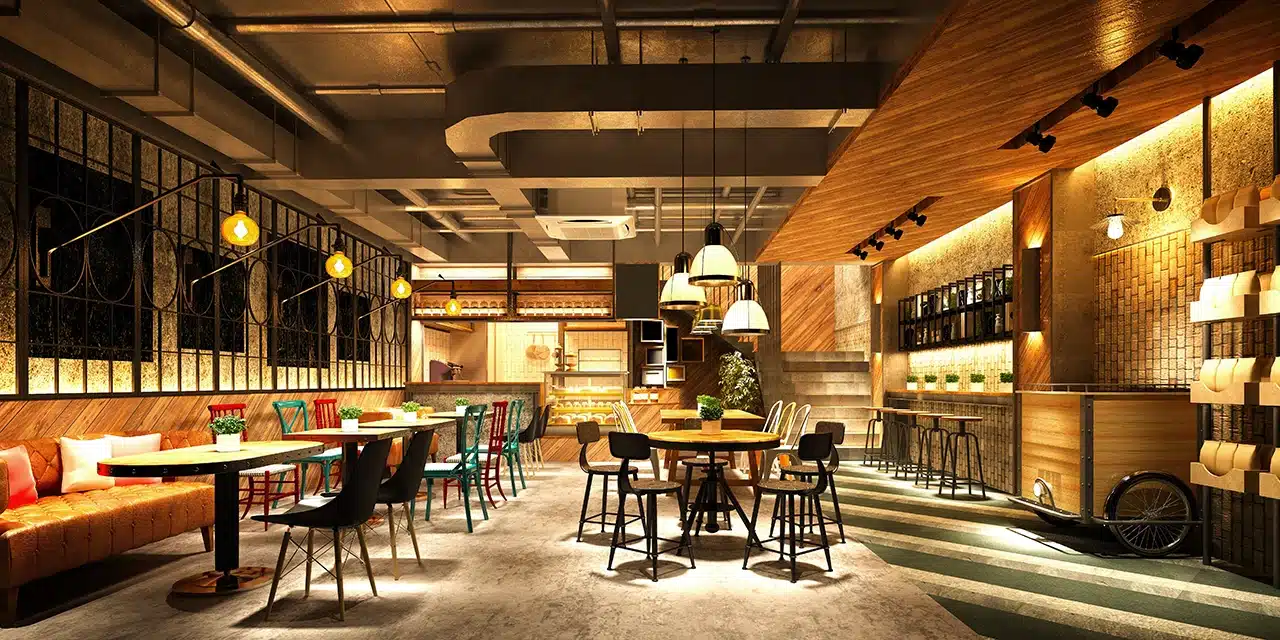
Opening a restaurant, a café, a bar or a hotel in Switzerland is governed by no federal statute: the cantons decide, and most of them require a diploma and an operating licence. The rule that catches investors out lies elsewhere. That licence is issued to a natural person, the operator, who must actually run the establishment. A limited company never holds it, and an investor who puts a diploma holder’s name on the licence while running the business himself falls under a precise legal definition, that of the front man, punished by three years of diploma suspension and immediate closure.
Contents
- A cantonal regime, not a federal one
- The diploma: what it costs and how it is obtained
- The operator, the company and the front man trap
- Three VAT rates in a single till
- Staff: a nationally binding collective agreement
- Food safety, self-checks and alcohol
- Taking over a business rather than starting one
- The pitfalls that cost the project
A cantonal regime, not a federal one
There is no federal restaurateur’s licence in Switzerland. Each canton legislates on the operation of public establishments, and the regimes differ both in the competent authority and in the content of the required diploma. In Geneva, everything rests on the act on catering, the sale of beverages, accommodation and entertainment, in force since 1 January 2016 and applied by the trade and undeclared work police. In the canton of Vaud, the cantonal trade police oversees the creation of a new establishment through a sequence that combines public enquiry, building permit and operating permit. In several cantons, part of the procedure is handled at municipal level.
This diversity has a practical consequence before the premises are even chosen: the question “am I allowed to operate here?” must be answered canton by canton, and the answer drives the timetable. The diploma takes months to obtain, whereas a commercial lease is signed in days. That is the first inverted sequence to correct in a hospitality project.
This guide uses the Geneva regime, the most documented and the most demanding, as the reference case. The mechanisms it illustrates, a personal licence, a diploma, effective operation, recur under other names in neighbouring cantons, but the thresholds and amounts do not transfer: they must be confirmed with the authority of the target canton.
The diploma: what it costs and how it is obtained
The diploma, commonly called the licence or patente, is the gateway to the operating authorisation. In Geneva it is obtained by passing examinations organised under the authority of the trade police, which delegates the operational side to the ifage. Two sessions are held each year.
| Item | Amount or rule |
|---|---|
| Examination fee, full diploma | CHF 500 |
| Exemption request | CHF 80, with no reduction on examination fees |
| Sessions per year | 2 |
| In case of failure | Two further attempts, within a window of five sessions |
| Convocation | Three weeks before the examination, date cannot be changed |
| Results | Marks issued two to three weeks after the examination |
| Preparation courses | Providers on the official list, free pricing |
Preparation is not a state cost: approved training providers set their own fees, a full course typically ranging from CHF 1,300 to CHF 2,200 with a private provider. Two forms of relief exist and are often overlooked. The law provides that a partial diploma is enough to operate a permanent limited-service refreshment outlet or an association refreshment outlet, which changes the arithmetic of a small project. It also allows the department to exempt holders of an equivalent diploma from all or part of the examinations: a professional trained elsewhere in Switzerland, or holding a recognised trade qualification, should file an exemption request before the registration deadline, since no exemption is accepted once that deadline has passed.
The operator, the company and the front man trap
This is the point that decides the architecture of the project. The operating licence is issued to a natural person, subject to cumulative conditions: Swiss nationality, nationality of a state covered by the agreement on the free movement of persons, or the status of worker in Switzerland under the Foreign Nationals Act; capacity to act; holding the diploma, subject to the partial diploma and to exemption; offering, through their record and conduct, every guarantee of lawful operation, including in social security and employment law, with an official certificate of no arrears in contributions where the operator is an employer; and offering every guarantee of personal and effective operation, having regard in particular to residence and availability.
The law goes further than a formal requirement. It provides that the business may be operated only by the person holding the licence, and that this person must manage the business effectively, exercising actual control over it. Where the operator is temporarily absent, a competent replacement must be appointed and instructed, and that replacement also bears responsibility for the operation. Finally, the operator answers for the conduct of everyone taking part in running or entertaining in the establishment.
My Swiss Company tip
The front man is not a vague notion: Geneva law defines it as the conduct of a diploma holder who is formally authorised as the operator but who does not personally and effectively perform the essential tasks of running the business, those tasks being carried out in fact by a third party. The consequences are cumulative: 36 months of diploma suspension, withdrawal of the licence with immediate closure, and a 36-month bar on any new application for everyone involved, including the owner of the business. The administrative fine can reach CHF 60,000, and where the offence is committed in the management of a company, that company is jointly liable. If your investor does not intend to stand behind the counter, the structure has to be designed differently from the outset.
In practice, the company and the operator are two distinct subjects. Nothing prevents a limited company from owning the business, the lease and the equipment: the law expressly provides for the operator to be designated by the owner of the business where the owner does not hold that capacity. But the designated person must genuinely manage. The choice of legal form then follows the usual logic: a sole proprietorship with no minimum capital for a single operator, with commercial register entry from CHF 100,000 of annual revenue, a GmbH from CHF 20,000 of paid-in capital to ring-fence the risk, an AG from CHF 100,000 with CHF 50,000 paid in where several investors come on board.
One last point on sequencing: a licence must be applied for at every creation, change of category or location, extension, conversion, change of operator or of owner of the business. A share transfer that changes the real owner is therefore not a neutral event as far as the licence is concerned.
Your restaurant project in Switzerland
The diploma drives the lease, not the other way round
Choice of canton and category of establishment, the interface between company and operator, the timetable for diploma and licence, a till configured for three VAT rates, payroll under a nationally binding agreement: My Swiss Company sequences your project properly, from Geneva, Lucerne or Zug.
Scope your project
Swiss Corporate Services Provider in Geneva, Lucerne and Zug, serving clients in more than 20 countries.
Three VAT rates in a single till
Hospitality is the only sector in our series where three VAT rates coexist in the same establishment. Liability begins at CHF 100,000 of annual turnover, computed on Swiss and foreign revenue combined, with registration due within 30 days of becoming liable.
| Rate | Value | Scope |
|---|---|---|
| Standard | 8.1% | All catering services, alcoholic beverages included |
| Reduced | 2.6% | Food taken away or delivered, excluding alcoholic beverages, subject to conditions |
| Special accommodation rate | 3.8% | Lodging with breakfast, even if invoiced separately |
The condition in paragraph 3 is the trap of the trade. The standard rate applies to food supplied as part of catering services, that is where the taxable person prepares or serves it for customers, or provides special facilities for on-site consumption. For food intended to be taken away or delivered, alcohol excluded, the reduced rate applies only if appropriate organisational measures have been taken to distinguish those supplies from catering; in the absence of such measures, the standard rate applies.
In other words, the reduced rate on takeaway is not an entitlement: it is earned through a demonstrable organisation, typically a till that separates takeaway items from on-site items, receipts that state it, and a procedure known to staff. An establishment selling without that separation applies the standard rate to all its sales, and any reassessment covers the open periods. The special accommodation rate applies until 31 December 2027 at the latest.
Staff: a nationally binding collective agreement
The national collective agreement for the Swiss hospitality industry is drawn up by six social partners: GastroSuisse, HotellerieSuisse and the Swiss Catering Association on the employer side, Hotel & Gastro Union, Unia and Syna on the employee side. It has been declared generally binding by the Federal Council, which means it applies to every business in the sector, whether or not it belongs to a signatory association. It covers roughly 250,000 employees and 34,000 establishments.
| Category | Monthly minimum |
|---|---|
| Without vocational training | CHF 3,713 |
| With Progresso certificate | CHF 3,943 |
| Federal VET certificate | CHF 4,070 |
| Federal VET diploma | CHF 4,528 |
| With further training | CHF 4,635 |
| With federal professional examination | CHF 5,293 |
| Trainees | CHF 2,390 |
These amounts take effect on 1 January 2026 for year-round establishments and on 1 May 2026 for seasonal ones. They are a floor, not a guideline: a contract providing for less is void on that point. In Geneva, the law adds its own duty by requiring the operator or the employing owner to comply with the working conditions customary in the sector locally, which must be verifiable and documented.
Food safety, self-checks and alcohol
Swiss food law requires every establishment to run a self-check system based on HACCP principles, proportionate to the size and nature of the activity, and to notify the competent cantonal authority before opening. Inspections cover traceability, the cold chain, staff training and documented procedures: a self-check folder that exists but is not kept up to date protects no one.
Serving alcohol adds its own layer of cantonal and federal rules on opening hours, youth protection and signage. If your project includes retail wine sales alongside table service, the obligations of the alcoholic beverage trade come on top of those of the establishment: we set them out in our guide to starting a wine trading company in Switzerland.
Taking over a business rather than starting one
Taking over an existing establishment is attractive because it avoids building works and comes with a clientele. It calls for three checks that enthusiasm often skips. The first is the licence: it is personal, so it does not pass with the business, and a change of operator or owner triggers a fresh application. The second concerns staff: a transfer of undertaking in principle carries employment relationships across, with seniority and acquired terms, which weighs on the cost plan. The third is the lease, whose remaining term and assignment conditions determine the real value of the goodwill.
One point is worth knowing: an operating licence lapses when its holder renounces it in writing or stops using it for twelve consecutive months. Taking over premises that have been closed for more than a year therefore means starting from a complete application, not from a transfer.
The pitfalls that cost the project
The first is chronological: signing the lease, starting the fit-out, then discovering that the diploma takes months and that the next examination session has passed. The second is structural: setting up the company with a diploma holder who will not actually operate, which matches the legal definition of a front man and exposes every party, the company included. The third is fiscal: selling takeaway without documented separation in the till, and losing the reduced rate over the entire audited period.
The fourth is social: applying an in-house salary grid while ignoring that the national agreement is generally binding. The fifth relates to the category of establishment: a project drifting from café to bar with entertainment changes category and therefore licence, and that drift is discovered during an inspection rather than when it happens. None of these pitfalls is bad luck: they all come from an inverted order of operations.
FAQ: opening a restaurant in Switzerland
Do I need a diploma to open a restaurant in Switzerland?
There is no federal rule: each canton sets its own requirements. In cantons that regulate the activity, including Geneva, the operating licence is issued to a natural person holding the cafetier diploma, and the operator must actually manage the establishment. A partial diploma is enough for a permanent limited-service refreshment outlet or an association outlet, and holders of an equivalent qualification may be exempted from all or part of the examinations.
Can a company hold the operating licence?
No. The licence is issued to a natural person, the operator, who must exercise actual control over the establishment. The company may own the business, the lease and the equipment, and the law provides for the operator to be designated by the owner where the owner does not hold that capacity. But the designated person must genuinely perform the essential tasks, failing which the arrangement amounts to a front man.
How much does the Geneva diploma cost?
The examination fee for the full diploma is CHF 500, and an exemption request costs CHF 80 with no reduction on the examinations actually sat. Preparation is not charged by the state: providers on the official list set their own fees, a full course typically ranging from CHF 1,300 to CHF 2,200. Two sessions are held each year and, in the event of failure, candidates may retake the examinations twice within a window of five sessions.
Which VAT rate applies to takeaway sales?
The reduced rate of 2.6% applies to food taken away or delivered, alcoholic beverages excluded, but only if appropriate organisational measures distinguish those sales from catering. Without such measures, the standard rate of 8.1% applies. A till that separates the items, explicit receipts and a procedure known to staff are the evidence expected at inspection.
What are the 2026 minimum wages in Swiss hospitality?
The generally binding national agreement sets monthly minimums: CHF 3,713 without vocational training, CHF 3,943 with a Progresso certificate, CHF 4,070 with a federal VET certificate, CHF 4,528 with a federal VET diploma, CHF 4,635 with further training and CHF 5,293 with a federal professional examination, trainees at CHF 2,390. They apply from 1 January 2026 for year-round establishments and from 1 May 2026 for seasonal ones.
Does the licence transfer when a business is taken over?
No. The licence is personal and a new application is required on any change of operator or owner, as well as on a change of category or location, an extension or a conversion. It is also worth checking that the seller’s licence has not lapsed, which happens in particular where it has not been used for twelve consecutive months.
Sources
- Geneva act on catering, the sale of beverages, accommodation and entertainment (LRDBHD, rsGE I 2 22), of 19 March 2015
- Canton of Geneva, Applying for a licence to operate a public establishment
- Canton of Geneva, Obtaining the cafetier diploma
- Federal Act on Value Added Tax (SR 641.20), articles 10, 25 and 66
- National collective agreement for the Swiss hospitality industry (CCNT, L-GAV)
- GastroSuisse, the national collective agreement for hospitality
- Canton of Vaud, Creating a new establishment
Conclusion
Opening a restaurant in Switzerland is decided by sequence more than by budget. The diploma conditions the licence, the licence conditions the operation, and both belong to a person who must genuinely run the establishment. Around that backbone sit three disciplines that decide profitability: a till able to justify the reduced rate on takeaway, payroll compliant with a generally binding agreement, and self-checks that are actually maintained.
My Swiss Company SA is a Swiss Corporate Services Provider with offices in Geneva, Lucerne and Zug, supporting clients in more than 20 countries with company formation and administration. We frame the interface between company and operator, then handle accounting, correctly configured VAT and payroll under the sector agreement. To scope your project, let’s talk.